Back to Playground
Garage software
GearLizard
A workshop-grade maintenance system for trucks, bikes, boats, trailers, and every other machine that turns ownership into a pile of notes.
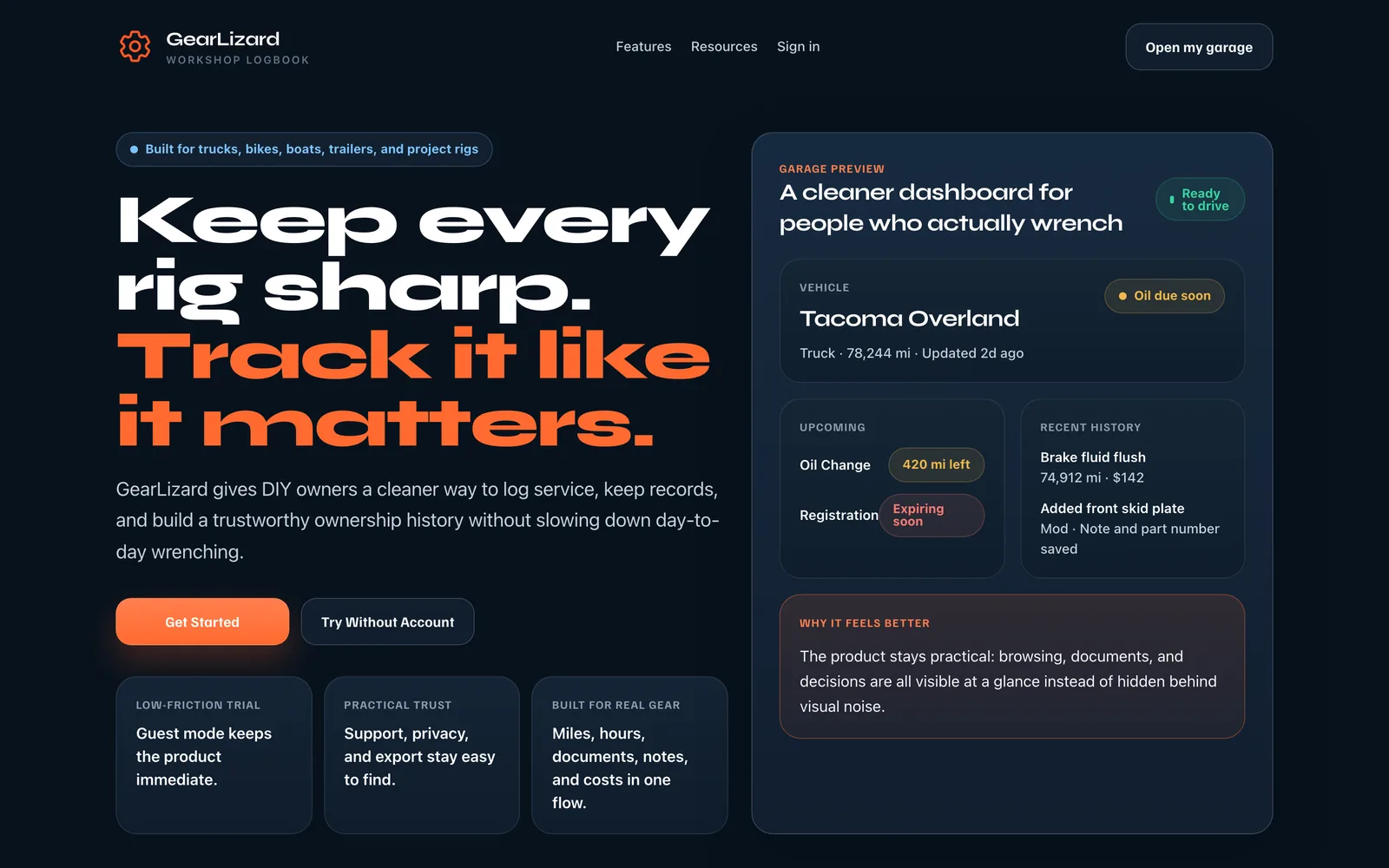
GearLizard is a dark, trust-first garage logbook that combines service history, reminders, private documents, pinned notes, guest-mode onboarding, and printable ownership records into one focused product for people who actually wrench on their stuff.
Flagship build
Garage software with some actual grit.
GearLizard is my attempt to make ownership history feel durable, fast, and a little proud of itself. The whole point was to build a logbook that feels closer to a trusted shop notebook than a limp spreadsheet.
ScopeService logs, reminders, documents, pinned notes, exports
Built forMixed fleets, real maintenance habits, resale-ready records
StackReact 19, TypeScript, Vite, Supabase, Tailwind CSS v4
miles / hours / bothguest modeprivate docsdeep-linked vehicle viewsprintable history record
Why it exists
The maintenance story for real-life vehicles usually gets scattered across receipts, phone photos, half-remembered mileage, sticky notes, and whatever random folder happens to be nearest when registration season shows up. That works until it absolutely does not.
GearLizard came out of wanting one place that could hold the whole picture without turning into enterprise fleet software. The target was never “a dashboard.” The target was a durable garage memory: something sturdy enough for daily use, fast enough to keep up with real ownership, and sharp enough that you actually want to keep it current.
Service history that stays readable
Preventive maintenance, repairs, and mods live in one timeline without losing the difference between them.
Reminders tied to reality
Intervals can run by miles, engine hours, or days, and relevant service logs can reset the reminder automatically.
Documents with deadlines
Registration, insurance, inspection, and other paperwork stay attached to the vehicle with expiration status and private storage.
Try it before you trust it
Guest mode keeps the product instant, then local garage data migrates into cloud sync when an account gets created.
What it does
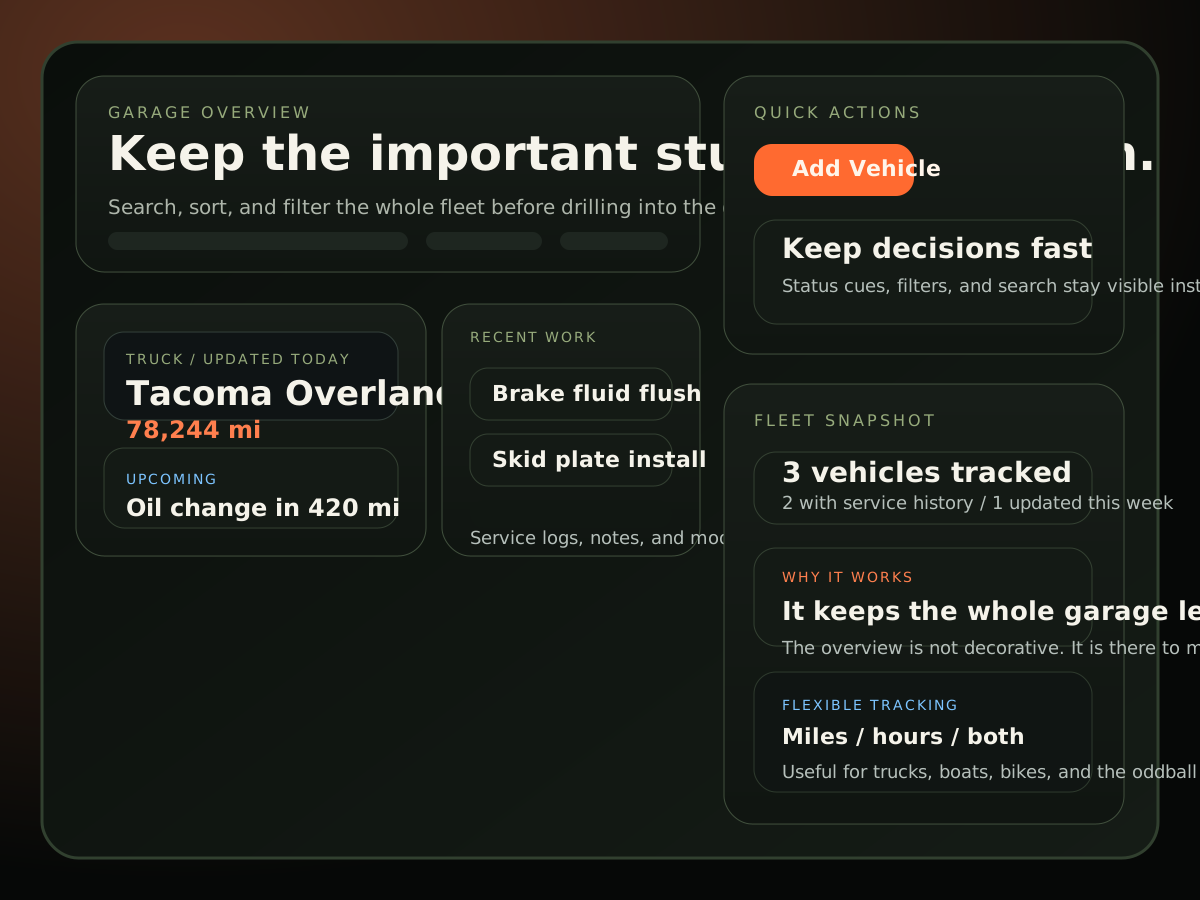
At the product level, GearLizard is trying to solve the full ownership loop instead of just a single screen. It starts with a searchable garage overview, opens into a detailed vehicle view, keeps documents and reminders close to the current state, and ends with a printable record when you need something more official than “trust me, I did the work.”
Search, filter, sort, and scan the whole fleet without digging through menus.
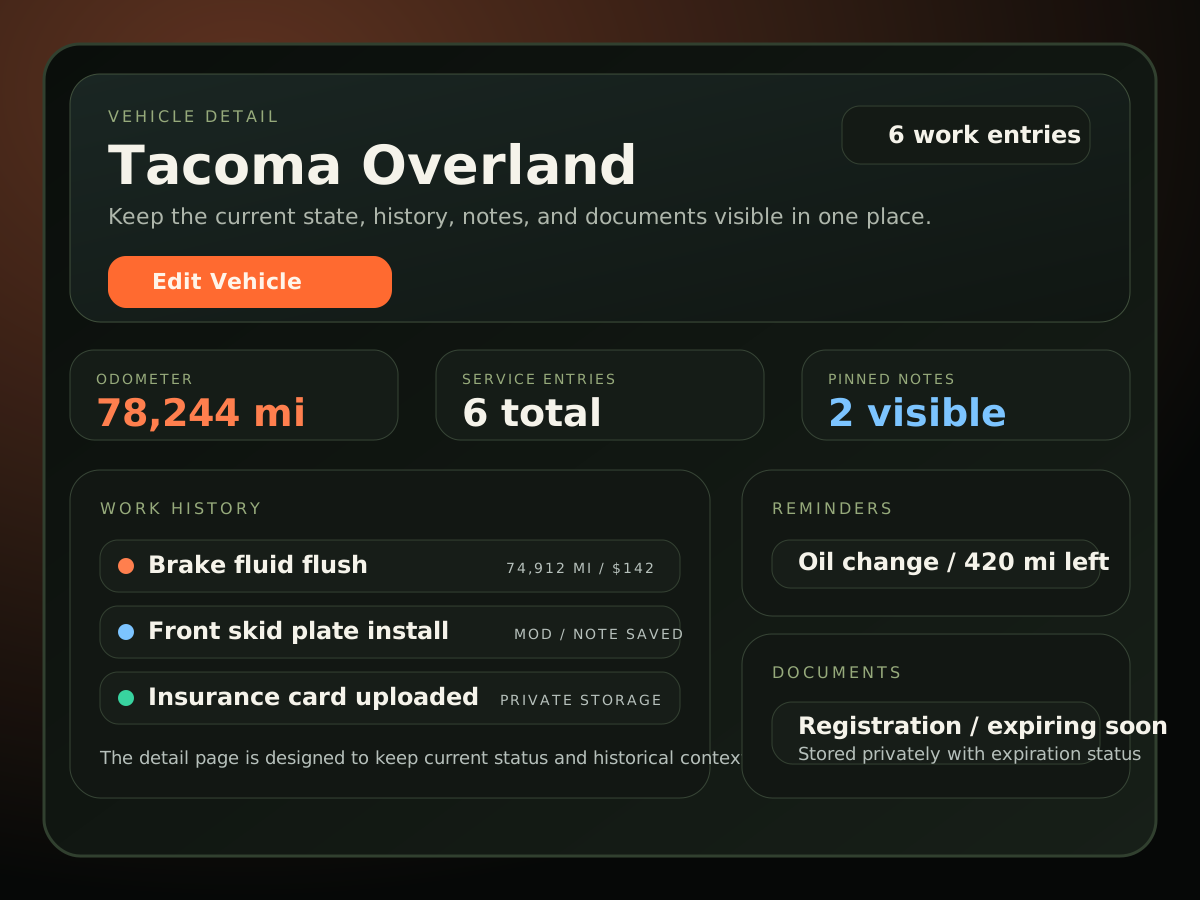
Current reading, pinned notes, service timeline, and cost context stay visible in one place.
Expiring paperwork and repeat jobs stay attached to the rig instead of floating around in memory.
A printable history report makes the software useful at resale, transfer, and insurance time too.
It also works across the awkward edges that make garage software harder than it first looks: trucks that track miles, boats that track hours, rigs that need both, and hobby fleets where some entries are closer to project notes than clean accounting.
What makes it interesting
The part I like most is the tension between taste and blunt utility. GearLizard is more cinematic than the average maintenance app, but the core actions stay obvious: add the rig, update the reading, log the work, pin the note, upload the document, print the record.
A garage app should feel like it belongs next to a tool chest, not inside a generic SaaS dashboard.
Full-product details that matter
Private document flow
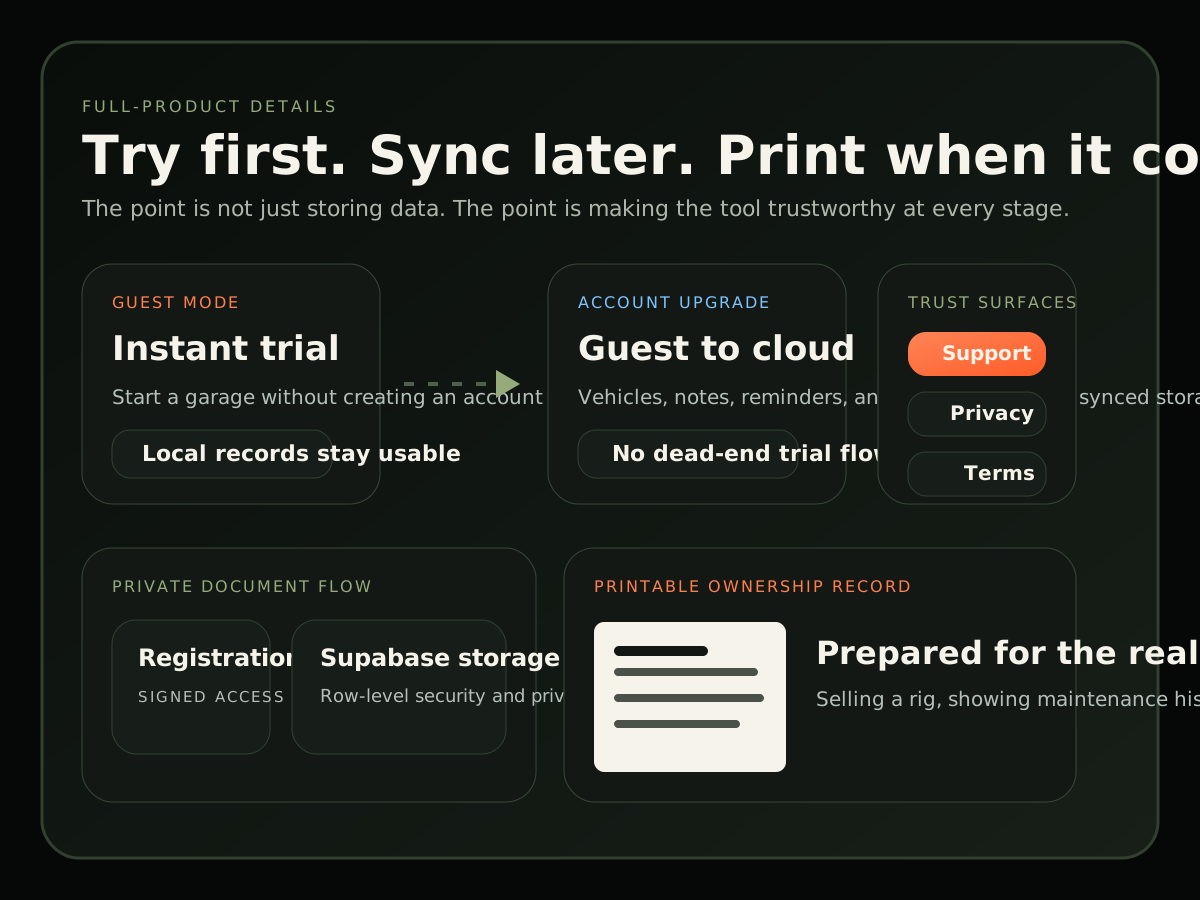
Supabase storage, signed access URLs, and row-level security keep the paperwork useful without turning it into a public file dump.
Guest to cloud migration
The app is usable immediately in guest mode, then local records migrate into authenticated accounts instead of getting stranded.
Routeable detail views
The selected vehicle syncs to the URL, so the garage feels stateful and linkable instead of trapped inside a dead-end modal flow.
Print-ready trust surface
The export is designed for real-world handoff moments: selling a rig, proving maintenance history, or keeping a cleaner paper trail.
Notes from building it
I kept pushing away anything that smelled too much like empty dashboard software. The interesting problem was not just storing data. It was translating the emotional texture of ownership, the grime, the cost, the relief of having real records, the low-key pride of keeping something dialed, into a clearer interface.
It also turned into a good test of product completeness. The flashy part is the visual direction, but the real credibility comes from the boring-important details: onboarding, guest mode, migration, private storage, support pages, export language, and all the little decisions that make a side project feel like a legitimate tool once it is public.
Gallery
More from the build.